Table of Contents
- Background and Importance of High-Speed Rail Integration
- Cross-operation of KTX and SRT from March 2026... Significant increase in seat supply at Suseo
- App Integration: Book KTX and SRT in One Go via the Korail App
- Increased Vehicle Efficiency through Mixed Operation of KTX and SRT
- Organizational and Operational Integration: Agency Integration Initiatives until Late 2026
- Expected Changes in User Environment and Benefits of Integration
- Conclusion: A Major Shift in High-Speed Rail Experienced by the Public
- Frequently Asked Questions (FAQ)
Background and Importance of High-Speed Rail Integration
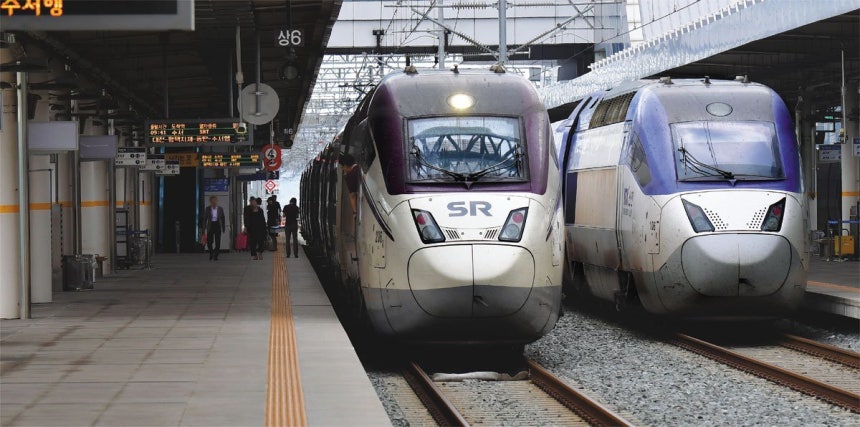
The government is planning a complete integration of KTX and SRT high-speed rail by 2026. Through this roadmap, they aim to improve the future transportation network.

Policies are being promoted to overcome limitations of the existing dual system, such as seat shortages, booking inconveniences, and operational redundancies. This issue has also been presented as a promise by the President. Particularly, the seat shortage in SRT is very serious, and due to congestion between Pyeongtaek and Osong, it is not easy to increase the service. These issues further highlight the necessity for integration.
The Ministry of Land, Infrastructure and Transport emphasizes through press releases that reducing public inconvenience and enhancing safety are the top priorities in designing integration plans. This is expected to bring significant changes to high-speed rail usage in the future.
Cross-operation of KTX and SRT from March 2026... Significant increase in seat supply at Suseo

The government has prepared measures to resolve the seat shortage issue. From March 2026, cross-operation of KTX from Seoul and SRT from Suseo will be officially implemented.
In particular, it is planned to assign KTX-1 (20 cars, 955 seats) to Suseo station to address the seat shortage problem in SRT. These measures are expected to provide travelers with better services.

KTX can now depart not only from Seoul Station but also from Suseo Station. SRT will also have the opportunity to depart from Seoul Station.
This move is expected to maximize efficiency by relocating KTX, which had low utilization from Seoul Station, to Suseo Station.
Implementation will take place as soon as the necessary pre-procedures, such as new section certification for operators and safety verification, are completed; this change is believed to be the first that the public will feel.
App Integration: Book KTX and SRT in One Go via the Korail App

The Ministry of Land, Infrastructure and Transport plans to integrate the booking procedures for KTX and SRT into a single application, the Korail app, by 2026. This is expected to allow users to book train tickets more conveniently.

Major improvements in app integration have been announced. The integrated search and payment functionality for KTX and SRT has been enhanced, allowing users to receive information for Seoul, Yongsan, and Suseo stations simultaneously when searching for Seoul.
Additionally, cancellation fees will be waived when changing trains between KTX and SRT. Transfer discount benefits between SRT and ITX-Maum are also planned.
These changes are part of an effort to reduce complexity and inconvenience in the booking process, providing users with more options and convenience.
Increased Vehicle Efficiency through Mixed Operation of KTX and SRT

A key element of high-speed rail integration is the ability to mix various vehicle types and operate freely from different endpoints. Moving away from the simple round-trip routes allows for flexible operation, such as traveling from Seoul to Busan, then to Suseo, and Pohang before returning to Seoul. These changes will contribute to building a more efficient transportation network.
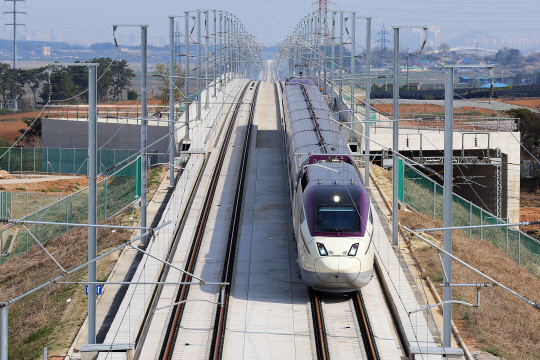
These measures carry several significant implications.
First, there will be an increase in the vehicle operation ratio. Second, the increase in seat supply will expand customer choices.
Third, it can alleviate concentration issues on specific routes. Fourth, the integrated operation of SRT and KTX will become possible.
However, safety verification procedures are essential, and pilot projects will be conducted in June 2026, with gradual expansion to follow.
Organizational and Operational Integration: Agency Integration Initiatives until Late 2026

Proposal for integration to enhance competitiveness
The government views this integration not merely as an absorption of SRT but as a structural improvement to enhance competitiveness in the railway industry.
It is also considering carefully the adjustment of personnel and compensation systems to ensure that SRT employees do not face disadvantages, and aims to smoothly proceed with the establishment of the basic integration plan and necessary legal procedures.
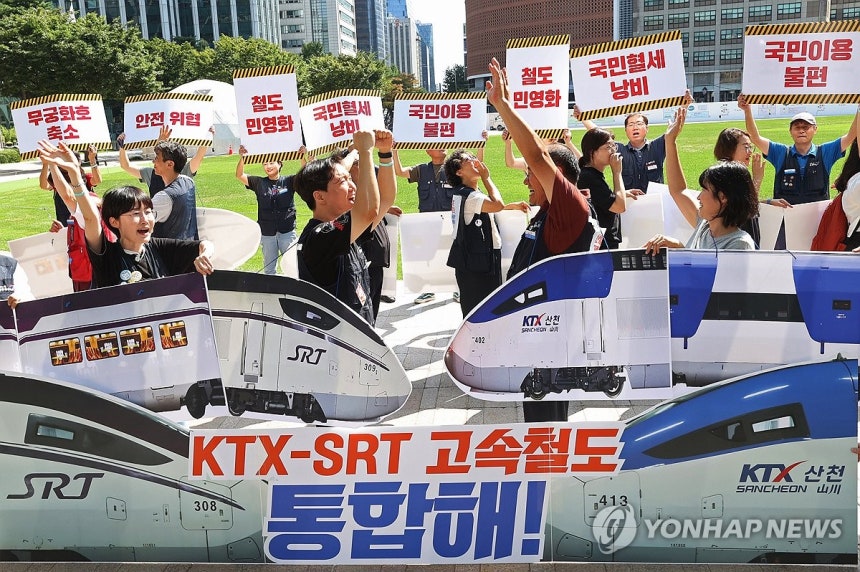
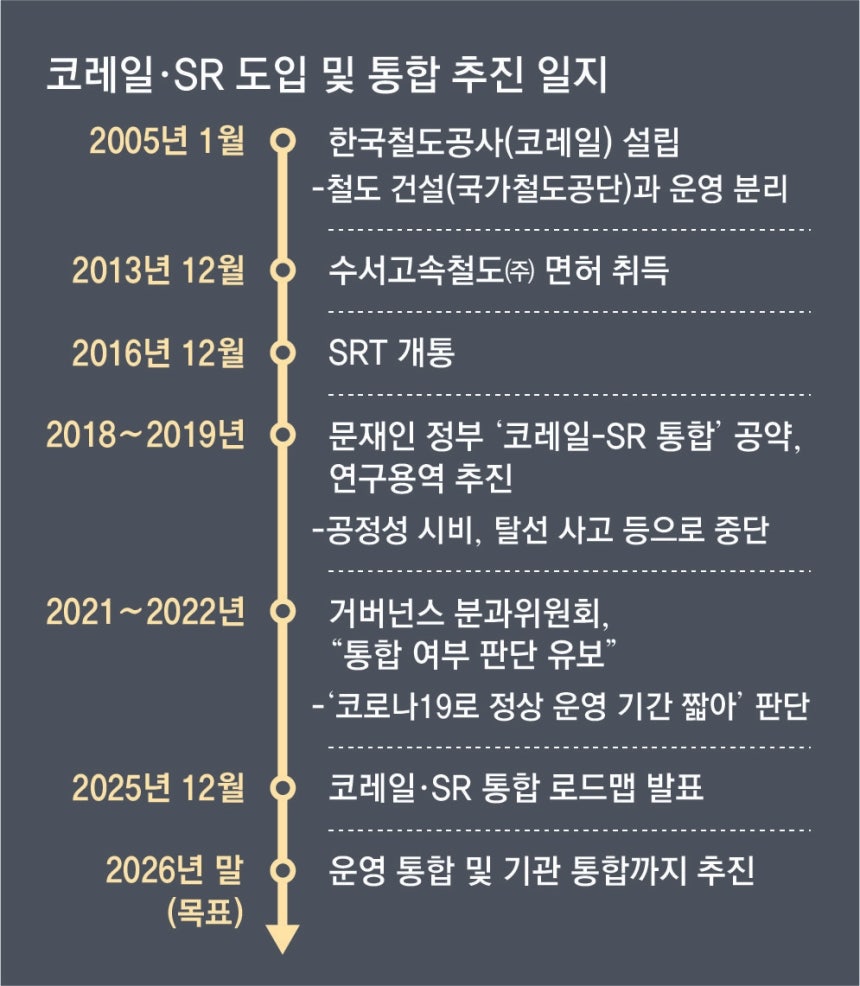
Various important procedures are being undertaken with a goal of completion by 2026. This includes the establishment of a basic integration plan and the work of integrating fare and mileage systems.
Designing organizational and financial systems will be carried out, and a labor-management-consumer council will be operated. Additionally, various institutional procedures, including safety approval from the Public Transport Committee and corporate merger reviews, will be progressed. Once all these processes are completed, the integration project will be ready for launch, including salary, welfare, and computer systems updates.
Expected Changes in User Environment and Benefits of Integration

The competition for SRT bookings at Suseo Station will ease, making it much easier to secure seats.
Bookings will now be possible through a unified platform integrating KTX and SRT, and transfer discounts will be offered. Furthermore, cumbersome cancellation or change fees will be significantly reduced.

Improving the quality of trunk railway services nationwide is essential. Introducing mixed operation and flexible routes will enhance operational efficiency in the long term, and through user distribution effects, reduce service disparities between regions.
Additionally, enhancing the safety of the railway system is also essential. According to the contents of the PDF, which requires safety management system approval, it highlights that safety can actually be enhanced throughout the integration process. These changes will positively impact railway users.
Conclusion: A Major Shift in High-Speed Rail Experienced by the Public
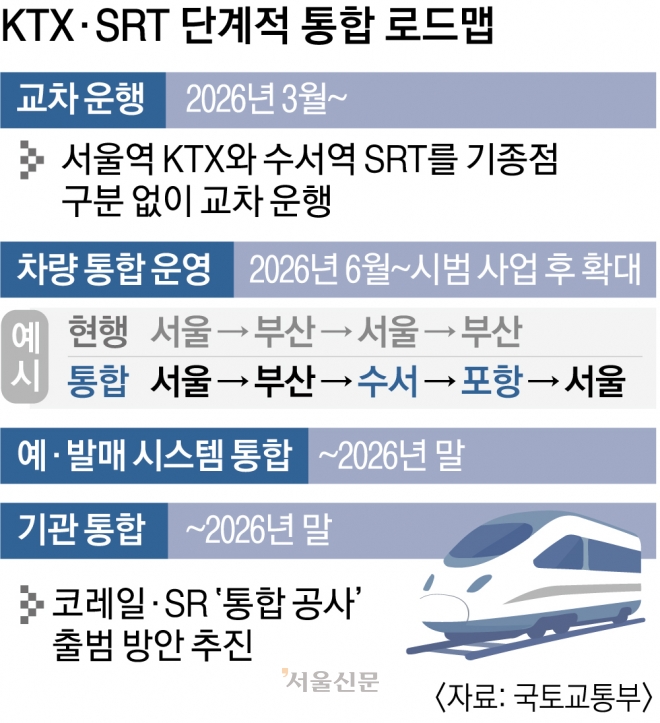
The integration of KTX and SRT, starting in 2026, brings about innovative changes across the entire high-speed rail experience beyond a simple merger of agencies.
Changes such as cross-operation starting from March, app integration, transfer discounts, mixed operation, and organizational integration are heading towards restructuring high-speed rail services into a nationwide unified network.
In particular, the cross-operation and app integration scheduled for March 2026 will be the most prominent changes that the public can experience immediately, marking an important turning point that will strengthen the competitiveness of the South Korean railway system.
#KTXSRTIntegration, #HighSpeedRailIntegration, #SRTKTXCrossOperation, #SuseoStationKTX, #SeoulStationSRT, #RailroadIntegrationRoadmap, #KTXBooking, #SRTBooking, #KorailAppIntegration, #RailSafetyEnhancement, #26RailReform, #HighSpeedRailReform, #MOLITRailPolicy, #SRTfromSuseo, #KTXfromSeoul, #ITXTransferDiscount, #RailBookingIntegration, #KTXSRTMixedOperation, #SeatShortageResolution, #RailCrossOperation, #RailIndustryCompetitiveness, #KorailSRIntegration, #KTXtoBusan, #SRTtoPohangExtension, #RailMileageIntegration, #RailLaborManagementConsumerJointMeeting, #RailSafetyManagementSystem, #RailwayAgencyIntegration, #RailServiceInnovation
Frequently Asked Questions (FAQ)
Q. What is the background of the KTX and SRT integration?
Integration is promoted to overcome the limitations of the existing dual system and to solve the seat shortage issue.
The government plans to integrate KTX and SRT to overcome the limitations of the existing dual system, such as high-speed rail seat shortages, booking inconveniences, and operational redundancy issues. The severe seat shortage in SRT and the congestion of the Pyeongtaek-Osong section further underscore the need for integration. The Ministry of Land, Infrastructure and Transport is designing integration plans with the top priority of reducing public inconvenience and enhancing safety.
Q. What is the cross-operation of KTX and SRT starting in March 2026?
The cross-operation of the KTX from Seoul and SRT from Suseo will expand seat supply.
The cross-operation of KTX from Seoul and SRT from Suseo will officially start in March 2026, greatly increasing seat supply. The plan is to assign the KTX-1 train (20 cars, 955 seats) to Suseo station to address the seat shortage in SRT. This will allow KTX to depart from Suseo station and SRT to depart from Seoul station, enhancing convenience and efficiency for users.
Q. How will the app integration of KTX and SRT be achieved?
By 2026, the booking for KTX and SRT will be integrated into the Korail app, providing more convenient services.
The Ministry of Land, Infrastructure and Transport plans to integrate the booking procedures for KTX and SRT into a single application, the Korail app, by 2026. Users will be able to search for and pay for KTX and SRT tickets integratedly, with information for Seoul, Yongsan, and Suseo stations provided simultaneously. In addition, cancellation fees will be waived when changing trains, and transfer discounts between SRT and ITX-Maum will be introduced, significantly enhancing user convenience.
Q. What are the effects of mixed operation and free endpoint operation?
Vehicle operation efficiency and seat supply will increase, alleviating route concentration issues.
The integration of KTX and SRT will allow for mixed operation of various vehicles and flexible endpoint operation. This will increase the vehicle operation ratio and contribute to expanding seat supply by allowing flexible routes, such as traveling from Seoul to Busan, then to Suseo, and Pohang. Additionally, it will help reduce the concentration issue for specific routes, thereby decreasing service disparities between regions and contributing to building an efficient transportation network. However, safety verification procedures are essential and will be gradually expanded.
Q. What are the user conveniences and expected benefits from the integration?
It will be easier to secure seats, increase booking convenience, and provide transfer discounts and waiver of fees.
Integration of high-speed rail will ease the competition for SRT bookings at Suseo Station, making it easier to secure seats. Users will be able to book easily through the Korail integrated app, with features such as transfer discounts and waiver of cancellation fees when changing trains, greatly reducing the inconveniences in the booking process. These changes aim to increase the options available to users and provide them with a better service experience, leading to a transformative shift in high-speed rail usage.
